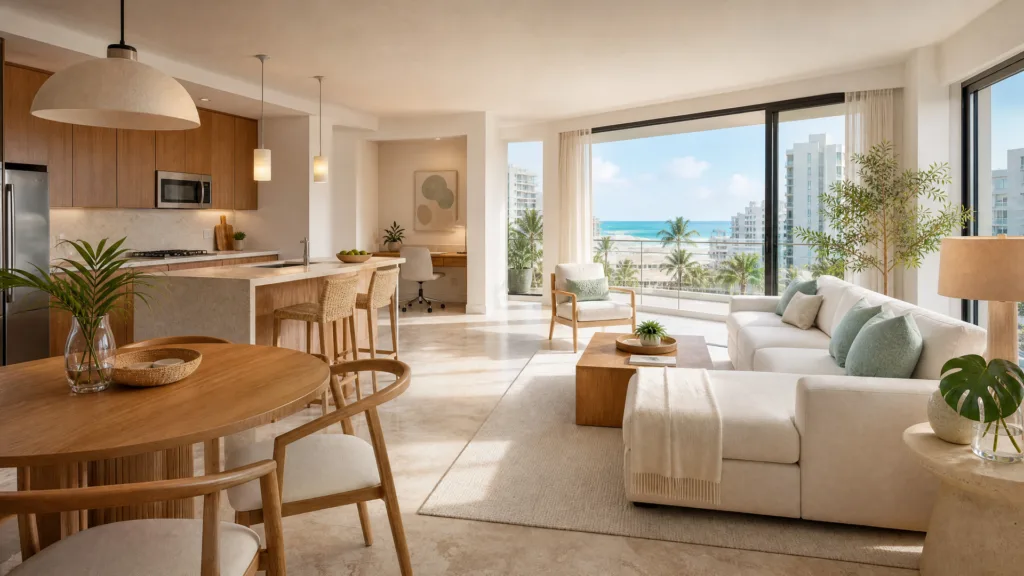
A furnished apartment can be a practical base for an extended stay, relocation, remote assignment, or a long vacation in Puerto Rico. Success depends on verifying what is included, how services are delivered, and how the lease is written. This guide explains the furnishings to expect, utilities and internet considerations, building rules, documentation, and the red flags to avoid before committing to a furnished apartment in Puerto Rico.
What “furnished” really means
There is no single statewide definition of a furnished apartment. The term can range from lightly equipped spaces to fully outfitted, move-in-ready homes. Confirm inclusions in writing before signing.
Core furniture and appliances
Most furnished apartments will include:
- Bedroom sets with bed frames and mattresses sized for the room
- Living seating such as a sofa and side chairs
- Dining table with chairs appropriate to occupant count
- Lighting, side tables, and storage such as dressers or closets
- Large kitchen appliances: refrigerator and range or cooktop, often a microwave
- Laundry equipment where building rules and hookups allow
The condition and quality of these items vary. Ask for photos and a written inventory with brands and model numbers where relevant.
Linens, kitchenware, and cleaning basics
A move-in-ready furnished apartment should make the first night and first week functional without an emergency shopping run. Clarify:
- Bed and bath linens: fitted and flat sheets, pillow protectors, extra pillows, duvet or blanket, bath and hand towels, kitchen towels
- Kitchenware: cookware set, baking sheet, cutting board, knives, utensils, dishes and glassware at least to the stated occupancy, kettle or coffee maker
- Cleaning and maintenance: broom, mop, vacuum, starter trash liners, dishwasher pods if applicable, and a schedule for professional cleanings
Services and utilities: what is included
Furnished rentals may bundle some utilities, but practices differ by owner and building. Confirm in the lease:
- Electricity: who opens or maintains the account, billing responsibility, and any caps or pass-through provisions
- Water and sewer: inclusion or separate billing
- Internet: provider, advertised plan, modem/router equipment, and whether Wi‑Fi passwords change between guests
- Cable or streaming arrangements
- Housekeeping: frequency, scope, and whether linen service is included or optional
Electricity costs in Puerto Rico fluctuate because regulated rates have multiple components that can change and usage varies with air-conditioning, appliance load, and apartment size. It is best practice to ask the landlord for recent electricity bills to understand consumption patterns and tariff effects rather than rely on a universal monthly figure 2.
Internet and remote-work readiness
For remote work, the headline download speed is only one factor. Stability, upload capacity, and backup options matter. Puerto Rico’s official broadband program targets service quality at or above 100 Mbps down and 20 Mbps up while emphasizing infrastructure hardening, which is a useful benchmark when you review a property’s service plan and redundancy 3. Ask for:
- The ISP name, plan tier, and typical measured speeds at the unit
- Router placement and Wi‑Fi coverage within the apartment
- A wired Ethernet option at the main desk or workstation
- Any secondary connectivity, such as a mobile hotspot kept on site for outages
Market context and pricing signals
Understanding baselines helps frame expectations. HUD’s Fair Market Rents are government estimates of 40th‑percentile gross rents for standard-quality units by area, a useful benchmark for unfurnished housing but not a proxy for prime, fully furnished beachfront inventory 1. Private-market asking rents reported for San Juan show approximately $1,900 for one-bedroom apartments and around $2,400 for two-bedroom apartments, with larger apartments starting near $2,600, reflecting the broader city rather than furnished, beachfront stock 6. Furnished apartments in highly walkable coastal districts can price differently depending on building, term length, and inclusions.
Demand also tightens around peak travel periods and major events. Official tourism records cite strong islandwide performance in 2025, which signals that availability may compress at certain times even for monthly stays in popular districts 5. Flexible dates, early planning, and willingness to consider multiple comparable buildings increase options.
For a structured comparison of extended-stay formats, see Puerto Rico Monthly Rentals: The Complete Guide to Extended Stays at Puerto Rico monthly rentals guide. For lease mechanics and common clauses in Puerto Rico, review the Puerto Rico Lease Guide at Puerto Rico lease guide.
Utilities, continuity, and building systems
Utilities are central to comfort and predictability. Ask precise questions before a lease is executed.

Electricity and air‑conditioning
- Rate structure: Puerto Rico’s electricity rates are set and adjusted through regulated components. The Energy Bureau’s orders change over time, so totals vary with tariff updates and usage 2.
- Usage drivers: square footage, orientation, number of occupants, split‑unit or central air, thermostat discipline, and work‑from‑home patterns
- Billing: whether the account remains in the owner’s name with pass‑throughs or is transferred to the tenant, and what happens if a bill arrives after departure
Request two to three prior months of electricity bills for the specific unit to understand consumption during similar weather and occupancy. If that is not possible, ask for a written disclosure of average kWh use under typical conditions.
Water, hot water, and appliances
- Confirm water inclusion and any building-provided hot water versus in-unit heaters
- Ask about dishwasher, disposal, and laundry machines, including maintenance responsibilities
- Verify plumbing fixtures and water pressure during a live or recorded walkthrough
Generator and cistern scope
In some buildings, common-area generators and water cisterns support basic services during short utility interruptions. Treat these as continuity features, not guarantees. Ask:
- What areas are powered by the generator and for how long under typical conditions
- Whether the apartment’s outlets, air-conditioning, elevator, and internet equipment are on the generator circuits
- Cistern capacity at the building level and which fixtures are supplied
- Testing and maintenance schedules and who communicates outage updates
Internet resilience and backups
- Identify whether the network demarcation point is within the unit or a shared closet
- Check for surge protection on modem, router, and network switches
- Confirm any backup connectivity method, such as a configured LTE hotspot kept charged and accessible
Lease terms that matter in furnished rentals
The written lease is the controlling document. Insist on complete, clear language and supporting attachments.
Inventory and condition documentation
- Inventory addendum with itemized furniture, linens, electronics, art, and appliances
- Condition report with photos or video links taken at move‑in, countersigned by both parties
- Stated replacement-value method or depreciation schedule for listed items, with normal wear and tear excluded
Payment structure and security
- Total price breakdown: base rent, utilities or service bundles, cleaning fees, HOA registration or parking fees
- Accepted payment methods and due dates
- Security deposit accounting and the process and timeline for post‑departure reconciliation, as stated in the lease
Avoid sending funds before a full, signed lease is executed and key identity details are verified.
Access systems, guests, and use rules
- Keys, fobs, and digital lock codes with a defined handover and reset protocol
- Authorized occupants and guest limits, including notification requirements
- Quiet hours, balcony use, and common‑area rules from the condominium’s bylaws or house rules
- Smoking policy, including balconies and any penalties for remediation
Pets and service animals
- Pet acceptance, size or species limits, additional deposits or fees, and required documentation
- Elevator etiquette, designated pet relief areas, and cleaning expectations in common spaces
- Any restrictions on balcony or pool access with pets
If assistance animals are involved, the process for documentation and reasonable accommodation should be referenced in the building’s policy set.
Access, security, and arrivals
Arrival procedures signal how professionally a property is managed. Clarity reduces friction.
- Pre‑arrival: obtain the exact building address, permitted arrival window, parking instructions, and a single point of contact for keys and troubleshooting
- Identity verification: what form of ID is required by the building and how it is secured
- Door and elevator systems: test access at check‑in and confirm spare keys or code changes after each tenancy
- Packages and deliveries: where shipments are accepted and any building registration required for couriers
Red flags and how to verify a listing
Fraud and avoidable disputes often share similar warning signs. Be cautious when you see any of the following:
- No written lease or refusal to provide building rules before payment
- Vague or changing descriptions of included items or internet service
- Pressure to commit or pay immediately, unusually low pricing without a credible explanation, or requests to use informal payment channels outside standard banking
- Inability to offer a live video walkthrough or a recent, date‑stamped video of the exact unit
- Mismatched names among the owner, building HOA, and the account receiving funds
Verification steps that help:
- Ask for a copy of the owner’s deed cover page or HOA statement with sensitive data redacted, matched to ID details in the lease
- Cross‑check the unit’s existence in the building directory or with the HOA office
- Require that all payments flow to the named lessor or a documented management company via traceable methods
Pre‑signing checklist for furnished apartments
Use this table to structure final diligence before committing to a furnished apartment in Puerto Rico.
| Category | Confirm Before Signing | Notes |
|---|---|---|
| Inventory and Condition | Itemized inventory with photos or video; condition report countersigned | Exclude normal wear and tear from charges |
| Utilities | Who pays electricity, water, internet; sample electricity bills provided | Rates and usage vary, so avoid a fixed assumption 2 |
| Internet and Work Setup | ISP, plan tier, measured speeds, router placement, wired Ethernet option | Compare to the island’s quality target and confirm backups 3 |
| Access and Security | Keys, fobs, codes; lock reset protocol; guest policy | Include parking and delivery procedures |
| Payments | Total price breakdown, due dates, accepted methods; deposit terms | Funds only after full lease execution |
| Cleaning and Maintenance | Housekeeping frequency; linen handling; response times; contact method | Define who buys consumables and how repairs are approved |
| Building Rules | HOA rules attached; quiet hours; balcony and amenity policies | Pet rules and registration steps included |
| Move‑in and Move‑out | Walkthrough timing; meter reads or photos; handover checklist | Stated timeline for deposit reconciliation |
Arrival day and first‑week setup
A methodical first week protects your deposit and reduces support calls later.
- Conduct a joint walkthrough within 24 hours, noting any pre‑existing marks, stains, or appliance quirks
- Photograph meter readings if utilities are in your name and confirm account login access
- Test every burner, faucet, shower, and outlet; run a full Wi‑Fi speed test and a video call from your primary workstation
- Review trash and recycling days, building quiet hours, amenity reservations, and package procedures
- Place a labeled starter kit in a cabinet for replacement bulbs, batteries, and spare filters if permitted
A note on supply and booking
High-demand dates and large events shrink the pool of suitable furnished apartments well beyond nightly vacation rentals. Islandwide travel records underscore this trend, so align dates early, keep a secondary unit on your shortlist, and be prepared to commit once documentation checks out 5. Month-to-month rolls and mid-stay extensions should be discussed before signing if your plans are uncertain.
How to compare similar units
When two options appear comparable, use an apples-to-apples grid before deciding:
- Square footage and usable layout, including bedroom separation and workspace placement
- Natural light and window orientation relative to afternoon sun
- Kitchen function: counter depth, ventilation, and cookware quality
- Internet plan and wiring, plus backup method and where equipment sits on any generator circuits
- Noise exposure from elevators, mechanical rooms, or nightlife streets
- Building operations: on‑site manager or not, maintenance response channel and hours, and how vendors access the unit
For guests who prefer a professionally managed base in Condado, KTJ Krug operates 10 furnished units across the street from the beach, with continuity features such as a building generator and water cistern, pet‑friendly options in selected residences, and up to 1 Gbps fiber internet in certain units. Review current availability and book direct at furnished Condado apartments or book direct for date clarity, feature fit, and documentation that supports a smooth stay.
References
1 HUD describes Fair Market Rents as 40th‑percentile gross rent estimates and publishes area baselines used for housing programs. These figures help frame unfurnished benchmarks for context rather than set prices for prime furnished inventory.
2 Puerto Rico’s Energy Bureau issues orders that adjust electricity billing components, which means monthly totals vary with usage and tariff updates. Request recent unit‑specific bills instead of assuming a fixed cost.
3 Puerto Rico’s official broadband program targets recurring capacity at or above 100/20 Mbps and emphasizes infrastructure hardening, a useful lens for evaluating service plans and redundancy.
4 Puerto Rico’s Incentives Code is the authoritative statute for decree programs. Housing documentation can support broader records, but advisors should assess residency and compliance requirements for each individual.
5 The island’s tourism agency reports record travel activity for 2025, which indicates tighter availability around peak periods and events.
6 Private‑market analysis shows approximate San Juan asking rents in early 2026 for one‑ and two‑bedroom apartments, useful as a general citywide reference rather than a furnished beachfront benchmark.
Frequently Asked Questions
What is typically included in a furnished apartment in Puerto Rico?
Expect core furniture, large appliances, basic cookware, and seating for the stated occupancy. Many rentals include linens and starter supplies, but this varies. Always request a written inventory and a condition report so expectations are aligned. Clarify who replaces consumables after the first week.
How can one estimate monthly electricity costs in a furnished rental?
Costs depend on apartment size, air‑conditioning use, occupancy, and tariff components that change over time. Ask the owner for recent unit‑specific electricity bills to understand usage rather than relying on a single universal estimate 2. If a cap applies to included utilities, obtain it in writing and confirm the overage calculation.
What should a remote worker verify before booking a furnished apartment?
Confirm the ISP, plan tier, and measured speeds at the unit during working hours. Ask about router placement, a wired Ethernet option, and any backup connectivity such as a configured mobile hotspot 3. If the building has a generator, verify which outlets and the modem or router are on protected circuits.
Do furnished apartments work for Act 60 applicants or decree holders?
They can provide practical housing and a consistent address, but housing alone does not establish bona fide residence or compliance with any decree. Keep a complete lease file, payment records, and service documentation, and consult qualified Puerto Rico and U.S. tax and legal advisors about individual requirements 4. A professional review ensures your housing documentation supports your broader plan.
What are common red flags in furnished listings and how can they be avoided?
Beware of pressure to pay before receiving a complete, signed lease and the building’s rules. Avoid informal payment channels that lack traceability, and verify the property with a live or date‑stamped video of the exact unit. Cross‑check that the payee matches the named lessor or management company and that inventory and internet details are defined in writing.
Looking for a furnished monthly rental in Condado?
KTJ Krug has 10 furnished apartments about a one-minute walk from Condado Beach, with lease terms from 30 days to 12 months or longer. 1 Gbps fiber, on-site battery backup, full kitchens, and a pet policy with no size restrictions, breed bans, or pet deposit.
Schedule a tour